

When most people think of markets, they imagine busy streets, crowded stalls, and colorful displays of goods on land. But in the Mekong Delta of Vietnam, markets take on a whole different form—on water. Among these, the Cai Rang Floating Market in Can Tho is the largest and most famous, a living cultural heritage that has attracted travelers from all over the world. Here, at dawn each day, the Mekong comes alive with hundreds of boats, bustling trade, and a way of life that has remained unchanged for generations.
A Market Unlike Any Other
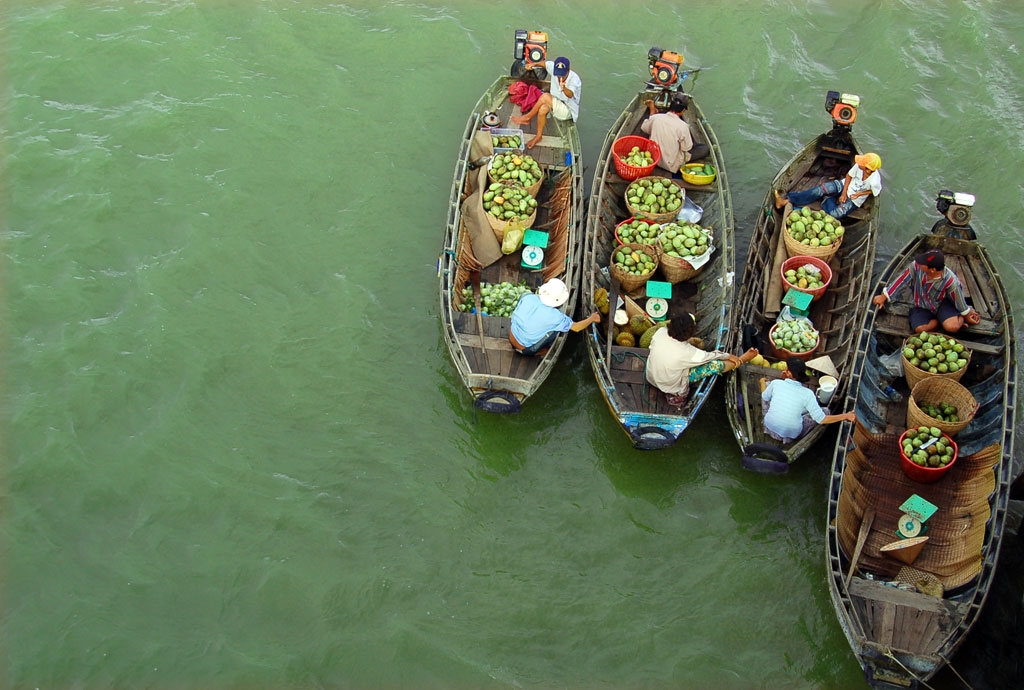
Cai Rang is more than a market—it is a cultural stage where daily life plays out against the backdrop of the great Mekong River. Stretching for almost a kilometer along the Hau River, the market gathers traders, farmers, and families who rely on these waters for both livelihood and connection. The market begins before sunrise, when the river is still misty and golden light filters over the horizon. By the time the sun rises, the waterway is filled with boats large and small, each loaded with fresh produce, regional specialties, and household goods.
Big boats act like floating warehouses, carrying tons of fruit such as watermelons, pineapples, and papayas. Smaller boats approach to buy in bulk, reselling the produce later in town markets. Meanwhile, tiny vendor boats weave their way among them, offering breakfast, hot coffee, or even cold sugarcane juice to traders and visitors. The sight is as lively as any urban marketplace, yet far more poetic, as it happens entirely on water.
The Unique “Advertising System” on the River
One of the most fascinating traditions of Cai Rang Floating Market is the way vendors display their products. Instead of shouting, bargaining loudly, or putting up signs, sellers hoist their goods on a long bamboo pole called a “cây bẹo”. A pineapple, a bunch of bananas, or a pumpkin hanging from the pole instantly tells buyers what’s on board. This practical yet creative system has been used for generations and is one of the defining images of the floating market.
It also creates a visually stunning scene—rows of boats with fruits and vegetables displayed high above the water, like colorful flags of the Mekong. For travelers, it is both picturesque and deeply symbolic of the harmony between ingenuity and tradition.
A Breakfast to Remember
Perhaps one of the most memorable experiences at Cai Rang is enjoying breakfast right on the river. As you drift between trading boats, you’ll encounter small vendors offering steaming bowls of pho, savory bun rieu (crab noodle soup), or warm sticky rice wrapped in banana leaves. Sipping a cup of strong Vietnamese coffee while sitting on a wooden boat in the early morning mist is an experience unlike any café on land.
These floating kitchens not only feed the traders but also add to the vibrant life of the market. Many travelers say that their breakfast at Cai Rang remains the most unforgettable meal of their journey through Vietnam.
When and How to Visit Cai Rang
The market operates daily, but the best time to visit is between 5:30 am and 9:00 am. Early risers are rewarded with the most lively atmosphere, when boats are busiest and the morning sun bathes the river in golden light.
Most travelers reach Cai Rang by taking a short boat ride (about 30 minutes) from Ninh Kieu Wharf in Can Tho city. Tours usually start early in the morning and may combine a visit to Cai Rang with other nearby attractions, such as small canals, tropical fruit orchards, or traditional noodle-making workshops. This way, visitors not only witness the market but also gain a deeper understanding of life along the Mekong Delta.
Beyond the Market: Exploring the Delta’s Charm
While Cai Rang Floating Market is the star attraction, the surrounding region of Can Tho and the Mekong Delta offers much more for curious travelers. Cruising through the smaller canals reveals a quieter side of delta life, where water palms line the banks and children wave as boats pass by. Visits to fruit orchards allow you to taste fresh tropical produce straight from the garden—mangosteens, rambutans, longans, and more, depending on the season.
Workshops provide another fascinating cultural encounter. Travelers can see how traditional rice noodles are made, sample rice paper fresh from the stove, or learn about the craft of boat building. These hands-on experiences complete the picture of a culture that is both rooted in tradition and full of vitality.
The Cultural Significance of Cai Rang
Cai Rang Floating Market is more than just a place to buy and sell—it is a living reminder of how the people of the Mekong Delta have adapted to a life where rivers serve as roads, markets, and meeting points. For centuries, these waterways have been the center of economic and social life. Even today, as supermarkets and modern trade expand, Cai Rang continues to thrive, drawing not only local buyers but also curious travelers who want to witness a unique way of life.
The market has also become a cultural icon of Can Tho, appearing in travel books, documentaries, and countless photographs. It represents the resilience and creativity of the delta communities, who have turned the challenges of a watery environment into opportunities for commerce and connection.
Why Cai Rang Is a Must-See
For travelers in Vietnam, a visit to Cai Rang Floating Market is more than a sightseeing stop—it is a cultural immersion. The market brings together everything that makes the Mekong Delta unforgettable: the energy of its people, the abundance of its land, and the beauty of its rivers. It is a place where tradition still thrives, where every boat tells a story, and where every moment on the water feels alive with color, sound, and movement.
Whether you’re a photographer chasing sunrise shots, a foodie eager to taste breakfast on the river, or simply a traveler curious about life beyond the big cities, Cai Rang will capture your heart. It is a place where the Mekong’s vibrant trade truly comes alive, offering not just memories but an understanding of how deeply water shapes life in Vietnam.
