


Located in the heart of Ninh Binh Province, about 95 kilometers south of Hanoi, Bai Dinh Pagoda is not just a religious site — it’s an architectural marvel and a cultural icon. With its massive scale, intricate design, and deep spiritual significance, Bai Dinh Pagoda draws thousands of pilgrims and travelers each year. Spanning over 700 hectares, the Bai Dinh spiritual complex is the largest pagoda in Vietnam, offering a blend of ancient Vietnamese traditions and impressive modern Buddhist architecture.
Whether you’re seeking a peaceful retreat, an awe-inspiring cultural journey, or a panoramic view of the limestone landscape, Bai Dinh Ninh Binh delivers an unforgettable experience. In this guide, we’ll explore everything you need to know about visiting Bai Dinh — from its fascinating history to the top things to see and tips for your trip.
A Sacred Site with Ancient Roots
The story of Bai Dinh Pagoda begins more than a thousand years ago. The original pagoda — now referred to as the Old Bai Dinh Pagoda — is nestled in a cave on Dinh Mountain. It was founded during the Dinh Dynasty (10th century) and later expanded in the Ly and Tran dynasties. This ancient site was where King Dinh Tien Hoang and King Le Dai Hanh came to pray for peace and prosperity.
In 2003, construction began on the New Bai Dinh Pagoda, creating a vast complex that combines historical relics with monumental modern architecture. The project was designed to preserve Vietnamese Buddhist heritage while accommodating large numbers of pilgrims. Today, the Bai Dinh spiritual complex includes temples, bell towers, courtyards, and hundreds of Buddha statues — all harmoniously set against the backdrop of Ninh Binh’s limestone mountains and tranquil valleys.
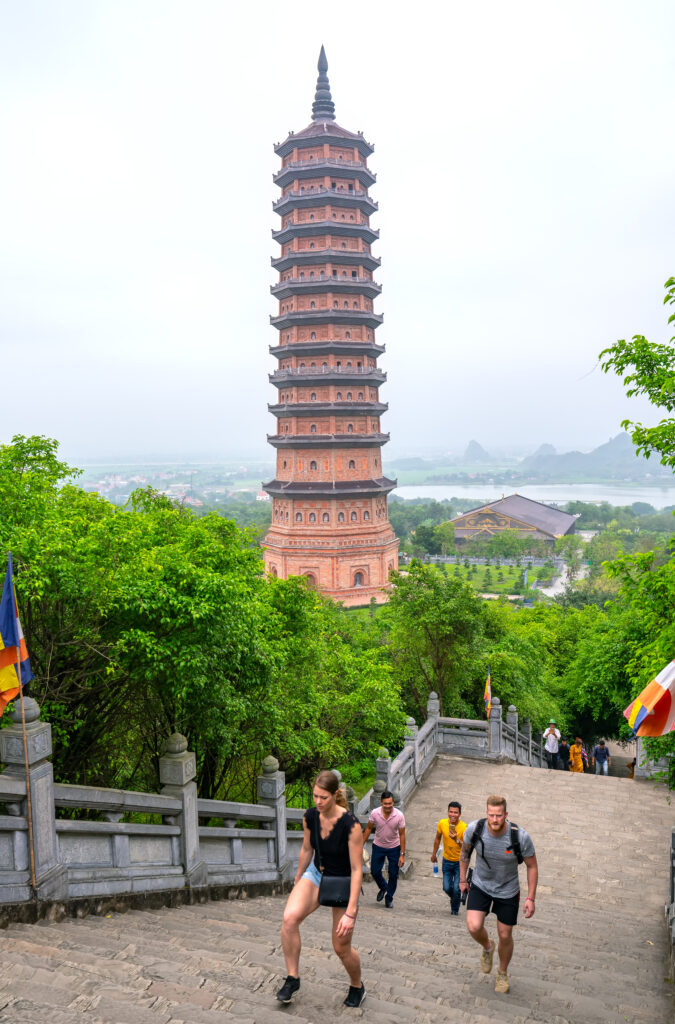
What Makes Bai Dinh So Special?
What makes Bai Dinh Pagoda so special is not only its vast size but also the number of national and regional records it holds, making it one of the most impressive Buddhist sites in all of Asia. As the largest pagoda in Vietnam, Bai Dinh features the tallest bronze Buddha statue in the country, weighing 100 tons and standing 10 meters high, as well as the largest bronze bell in Vietnam, which weighs 36 tons. Visitors are often most amazed by the corridor of over 500 Arhat statues, each meticulously carved from stone, stretching more than 1.7 kilometers — the longest of its kind in Asia.
In addition, the Bai Dinh spiritual complex is home to hundreds of Bodhi trees, symbolizing enlightenment and directly linked to the sacred Bodhi tree in India. These elements not only showcase the site’s architectural and spiritual grandeur but also affirm its importance as a pilgrimage destination and cultural landmark. The combination of traditional Vietnamese craftsmanship and the immense scale of modern construction makes Bai Dinh Ninh Binh a truly extraordinary place that leaves a lasting impression on anyone who visits.
Top Things to Do in Bai Dinh Pagoda
There are countless things to do in Bai Dinh, but here are some highlights you shouldn’t miss:
1. Explore the Arhat Corridor
Walk along the 1.7-kilometer stone corridor lined with more than 500 Arhat statues — each one unique in posture and expression. It’s a humbling and peaceful experience, offering insight into Buddhist teachings through visual storytelling.
2. Climb the Bell Tower
The 13-story Bai Dinh Bell Tower offers one of the best panoramic views of the surrounding karst mountains and temple roofs. Inside, you’ll find large bronze bells and a small museum of Buddhist art. Take the stairs or use the elevator — either way, the view from the top is worth it.
3. Visit the Giant Buddha Statues
The pagoda’s main hall features towering bronze statues of Amitabha, Shakyamuni, and Avalokitesvara (Guan Yin), glowing under natural light and incense smoke. These statues are some of the most revered in Vietnamese Buddhism.
4. See the Original Pagoda in the Cave
Don’t miss the Old Bai Dinh Pagoda, located about 800 meters from the main complex. This sacred cave temple includes altars for Buddha and Vietnamese historical figures. The path leads you through forested trails, and the atmosphere feels much older and more mystical.
5. Join in Festivals and Ceremonies
If you visit during Tet (Vietnamese Lunar New Year) or the Bai Dinh Pagoda Festival (spring, usually February–March), you’ll witness colorful processions, Buddhist rituals, and thousands of pilgrims offering incense. It’s an intense but beautiful cultural moment.
The Architecture: Where Ancient Meets Modern
One of the most striking features of Bai Dinh Pagoda is its architectural style. While built in recent decades, the complex uses traditional Vietnamese materials like stone, wood, and bronze. The sweeping curved roofs, intricate carvings, and grand halls are reminiscent of ancient dynastic temples, while the scale and layout are modern in ambition.
The use of eco-friendly design principles — such as natural ventilation, solar orientation, and local materials — reflects a commitment to sustainability. The entire Bai Dinh spiritual complex blends into the surrounding landscape, respecting the sacred mountains and valleys that have drawn monks and kings for centuries.
How to Get to Bai Dinh Pagoda
Bai Dinh Ninh Binh is located about 15 kilometers from Ninh Binh city center and around 95 kilometers from Hanoi. The easiest ways to get there:
- From Hanoi: Take a limousine bus (approx. 2 hours) or hire a private car for a day trip. Many Ninh Binh tours include Bai Dinh.
- From Ninh Binh or Tam Coc: You can take a taxi, rent a motorbike, or join a local tour. The road is scenic and safe, passing through rice fields and small villages.
Once you arrive, you can walk or take an electric buggy (available at the gate) to reach the main structures — helpful on hot or rainy days.
When to Visit Bai Dinh
The best time to visit Bai Dinh Pagoda is between January and April, especially during spring festivals when the complex comes alive with lanterns, incense, and prayers. However, this is also the busiest period. If you prefer quiet, visit early in the morning or on weekdays.
Avoid the rainy season (July–September) if you’re not a fan of wet weather, though the misty mountains can add a dramatic touch to the scenery. Early mornings and late afternoons are best for cooler temperatures and soft lighting — great for photography.
Tips for Visiting
- Dress modestly: This is a sacred place. Wear long pants or skirts, and cover your shoulders.
- Bring water: The complex is large, and you’ll be walking a lot.
- Wear comfortable shoes: Expect lots of stairs and hills.
- Start with the electric buggy: Save time and energy by taking the buggy to the highest point and walking down.
- Visit both old and new areas: Each part of Bai Dinh Pagoda offers a different vibe — the cave temples are more spiritual, while the new structures are grand and ceremonial.
Why Bai Dinh Should Be on Your Vietnam Itinerary
While many travelers come to Ninh Binh for boat rides and scenic landscapes, Bai Dinh Pagoda offers a powerful cultural and spiritual dimension to your trip. It’s a place where history is honored, Buddhism is celebrated, and architecture inspires awe. Whether you’re a devout Buddhist, a curious explorer, or a culture lover, Bai Dinh Ninh Binh provides a meaningful and memorable stop on your journey through northern Vietnam.
Final Thoughts
A visit to Bai Dinh Pagoda is more than just sightseeing — it’s a spiritual and cultural immersion. With its ancient caves, towering Buddha statues, tranquil atmosphere, and deep-rooted traditions, Bai Dinh offers a rare glimpse into Vietnam’s religious life. Whether you’re climbing the Arhat corridor, listening to prayer bells, or watching the sun set behind the mountains, the experience will stay with you long after you leave.
If you’re exploring Ninh Binh, don’t miss this extraordinary complex — a destination that’s both peaceful and powerful, humble and monumental. Truly, Bai Dinh Pagoda is a must-see in the spiritual heart of Vietnam.
