


Nestled in the heart of Dong Hoi city, Quang Binh Quan stands as a proud reminder of Vietnam’s storied past. It is located in Quang Binh province which is famous for the picturesque of Phong Nha Ke Bang. Built in the 17th century as a strategic military gate, this historical structure has withstood centuries of war, weather, and change. Yet despite its cultural value, it often escapes the attention of many travelers exploring the more famous caves of Quang Binh. But there’s more to this ancient gate than meets the eye.
Let’s uncover 5 fascinating facts that will make you want to add Quang Binh Quan to your travel list immediately.
1. Built for War: A Strategic Military Outpost
Quang Binh Quan was not merely a gate—it was a frontline bulwark in one of the most defining military conflicts in Vietnamese history. Constructed in 1639, under the rule of Lord Nguyen Phuc Lan, the structure played a pivotal role during the prolonged Trinh–Nguyen Civil War (1627–1672), which split the nation into two political zones: Dang Ngoai (North, ruled by the Trinh Lords) and Dang Trong (South, governed by the Nguyen Lords). This brutal standoff lasted nearly half a century, and the area around Dong Hoi became a critical military frontier.
Quang Binh Quan served as a key gateway within the Luy Thay (Master’s Rampart)—a sophisticated defensive system conceptualized by legendary military strategist Dao Duy Tu. These fortifications stretched across natural terrain like rivers, hills, and coastal plains, turning the landscape into a formidable shield against northern advances. At the heart of this system, Quang Binh Quan functioned as a strategic entry point to the South, both defending against external threats and asserting territorial control.
Positioned near the Hoanh Son mountain range, the gate was more than just a passage—it was a choke point of geopolitical significance. Control over this narrow corridor meant control over supply lines, communication routes, and regional authority. As such, numerous battles were fought in its vicinity, and the structure endured repeated assaults. Over time, it also operated as a customs checkpoint, regulating goods and people moving between the rival territories.
Though modest in size compared to imperial citadels, Quang Binh Quan stands today as a powerful symbol of resistance, statecraft, and national unity. Its survival through centuries of war and change is a testament not only to its solid construction, but also to its central role in the defense and shaping of Vietnamese sovereignty. For those who walk through its archway today, it offers more than a photo opportunity—it offers a window into an era when the fate of the nation hinged on the strength of walls like these.
2. Functional Design Over Imperial Flair
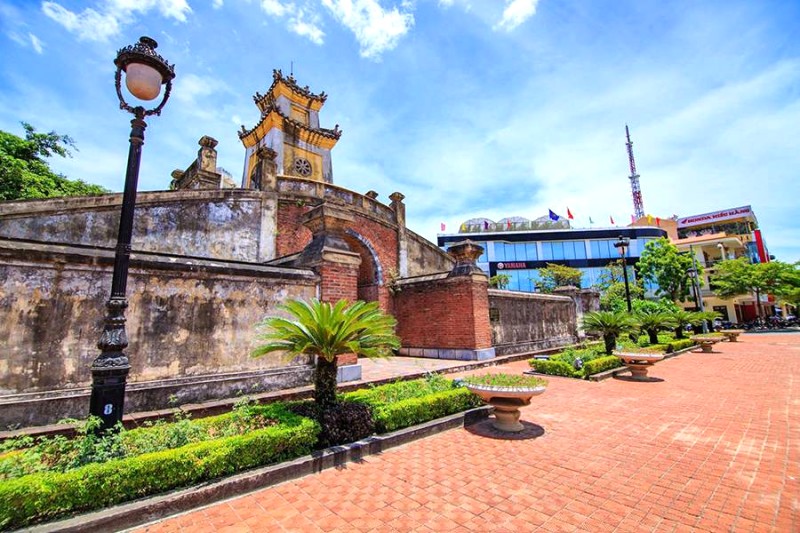
In contrast to the ornate, ceremonial gates found in imperial cities like Hue or Hanoi, Quang Binh Quan was never meant to dazzle with extravagance. Its purpose was clear from the beginning: to protect. This gate, constructed in the 17th century under the Nguyen Lords, exemplifies a form-follows-function approach that reflects both the strategic military needs and the rugged geography of central Vietnam.
Rather than gilded facades or dragon-carved tiles, Quang Binh Quan was built with local, resilient materials—including laterite, limestone, and baked bricks. These elements give it a grounded, earthy aesthetic, reinforcing its role as a defensive stronghold rather than a decorative monument. The architecture is sober but commanding, marked by its arched gateway over 4 meters high, thick walls, and battlements once manned by armed guards ready to defend the frontier.
Unlike the grandiosity of Hue’s royal gates, which were designed to impress diplomats and honor the emperor, Quang Binh Quan is compact, fortress-like, and highly utilitarian. It served as a checkpoint, a military post, and a physical boundary between north and south — a practical response to the volatile conditions of the region at the time.
While it may lack the imperial flourish of Thang Long Citadel in Hanoi or the stone grandeur of the Ho Dynasty Citadel in Thanh Hoa, Quang Binh Quan holds a quiet strength that mirrors the character of the people it once protected. It embodies the identity of a region forged by hardship — a place where survival required not only courage, but also clever engineering and cultural adaptability.
Upon closer inspection, visitors can still find finely carved stone patterns, traces of military inscriptions, and subtle ornamental details that hint at its craftsmanship. These touches prove that function did not come at the expense of artistry, making the gate a compelling subject for architects, historians, and curious travelers alike. For those who appreciate authentic historical architecture, Quang Binh Quan offers a rare, intact glimpse into Vietnam’s 17th-century military ingenuity.
3. A Survivor of Bombs and Time
Quang Binh Quan has not only witnessed centuries of conflict but has also suffered the harshest blows of modern warfare. During the Vietnam War, Dong Hoi became a key target due to its strategic location along the central coast. The city was subjected to relentless aerial bombings, and Quang Binh Quan—once a proud symbol of defense and unity—was nearly obliterated. What remained were fractured bricks, collapsed arches, and the fading memory of its former grandeur.
For decades, the gate stood in ruins, a silent casualty of war. Yet for the local community, its value never diminished. People continued to refer to it with reverence, recalling stories from their ancestors and clinging to its symbolic meaning. It was not just a physical structure—it was a piece of the city’s soul.
In the early 2000s, a major restoration initiative was launched with support from provincial authorities and cultural experts. Historians, architects, and skilled artisans worked side by side to bring Quang Binh Quan back to life. The team studied archival documents, historical sketches, and surviving architectural fragments to ensure accuracy. Wherever possible, they used traditional materials that matched the original—like hand-made bricks and lime-based mortar—to preserve its authenticity.
Local historian Dr. Le Trung Hai expressed the emotional weight of the project: “Quang Binh Quan is not just a monument—it is the living spirit of Dong Hoi. Its restoration is not only about bricks and walls, but about reviving a shared identity.”
What made this restoration truly special was the involvement of the community. Elderly residents came forward with memories, photos, and oral histories. Craftsmen passed down techniques used in earlier centuries. Young people volunteered to clean the area, plant trees, and share the story online. The entire city, in its own way, contributed to bringing the gate back.
Today, Quang Binh Quan once again stands tall. Its weathered walls carry the patina of time, and each brick whispers stories of survival, loss, and rebirth. Tourists come to admire its form, but locals see something deeper—a reminder of resilience and cultural pride. The gate’s survival through war, neglect, and reconstruction makes it not just a historical site, but a living monument to the unbreakable spirit of Quang Binh.
4. A Local Symbol of Identity
While often overshadowed by the breathtaking landscapes of Phong Nha-Ke Bang, Quang Binh Quan holds a deeply rooted place in the hearts of the people of Dong Hoi. More than just a historical structure, it serves as a powerful emblem of cultural identity and resilience. Over the centuries, it has witnessed wars, peace, destruction, and reconstruction — becoming a silent yet steadfast guardian of the city’s soul.
Today, Quang Binh Quan features prominently in school textbooks, official emblems, and public murals, reinforcing its status as an enduring symbol of heritage. It often appears as a backdrop during traditional festivals, public ceremonies, and patriotic events, where locals gather to celebrate not just their history, but their shared values of unity and perseverance.
For many residents, Quang Binh Quan is more than a monument — it is a source of pride. Parents bring their children here to pass on stories of the past. Tour guides refer to it as a “living memory” of Dong Hoi, and artists find inspiration in its aged bricks and elegant arches. Its central location within the city makes it easily accessible, inviting even short-term visitors to pause and reflect.
Travelers who stand before Quang Binh Quan don’t just admire a piece of architecture — they encounter a symbol of Vietnam’s enduring spirit. In that moment, the ancient gate becomes a bridge between the past and the present, between locals and guests. It offers something that no museum label can explain: a tangible sense of connection to a community that has endured, rebuilt, and continues to honor its roots with quiet dignity.
5. A Highlight on Historical Walking Tours
Quang Binh Quan is a key stop on any walking tour of Dong Hoi. Located near the old citadel walls, it serves as a gateway to other notable spots like:
- Tam Toa Church Ruins – a war-damaged cathedral preserved as a peace memorial.
- Mother Suot Statue – honoring a heroic woman during the resistance.
- Nhat Le River – perfect for boat rides or sunset walks.
- Local Markets – where travelers can sample traditional dishes like Banh Xeo and Lau Ca Khoai.
Most tours begin or end at Quang Binh Quan, and some include local guides who share lesser-known stories and legends. These guided experiences enrich your understanding of the gate’s role in Vietnam’s past, offering perspectives not found in guidebooks.
Best time to visit: Early morning or late afternoon, when the sunlight brings out the texture of the stone and offers great photo opportunities. Avoid midday heat, especially during the summer.
Why You Shouldn’t Miss Quang Binh Quan
For those exploring Quang Binh beyond its caves and rivers, Quang Binh Quan is a gateway to the soul of the region. It combines historical depth, architectural beauty, and living cultural memory in one walkable site. Whether you’re a history buff or a curious traveler, spending time here offers rare insights into Vietnam’s divided past, its resilient people, and the rich stories embedded in its stones.
